Creating a productive home office space is essential for anyone working remotely or spending significant time on personal projects. A well-designed workspace can improve your focus, reduce stress, and make your workdays more enjoyable. Whether you have a dedicated room or just a small corner in your home, these tips will help you transform it into an efficient and comfortable area for productivity.
Choose the Right Location
Selecting the best spot for your home office is the first step. Ideally, choose a quiet area with minimal distractions. If possible, a separate room with a door is perfect to help you establish boundaries between work and personal life.
– Natural light: Try to pick a space near a window. Natural light boosts mood and energy.
– Away from noise: Avoid busy or noisy areas like living rooms or kitchens.
– Space for equipment: Ensure your location has enough room for your desk, chair, and any devices you use regularly.
Invest in Ergonomic Furniture
Comfort plays a critical role in staying productive during long work hours. Ergonomic furniture supports good posture and reduces physical strain.
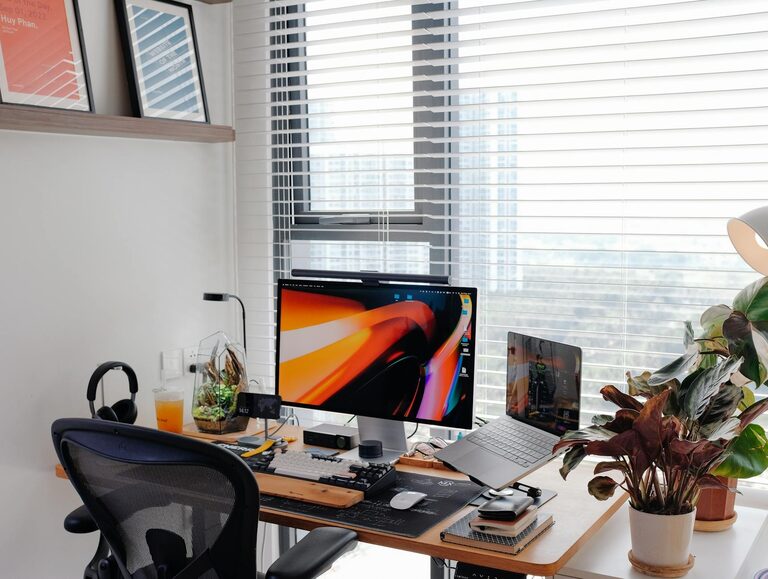
– Chair: Choose an adjustable chair with good lumbar support to protect your back.
– Desk: Opt for a desk that matches your height, or consider a sit-stand desk to alternate between sitting and standing.
– Monitor placement: Position your monitor at eye level to avoid neck strain.
Organize Your Workspace
A cluttered desk can negatively impact your focus. Keeping your workspace tidy and organized helps mental clarity and efficiency.
– Declutter: Regularly remove unnecessary items from your desk.
– Storage: Use drawers, shelves, or organizers to keep supplies and documents within reach but out of sight.
– Cable management: Use cable clips or sleeves to keep cords neat and prevent tangling.
Set Up Proper Lighting
Good lighting reduces eye strain and maintains alertness. Combining different light sources can create a balanced environment.
– Task lighting: Use a desk lamp with adjustable brightness for focused work.
– Ambient lighting: Ensure the room has sufficient general lighting to avoid harsh contrasts.
– Avoid glare: Position screens and lighting to minimize reflections and glare.
Personalize Your Space
Adding personal touches can make your office more inviting and motivating without cluttering it.
– Decor: Include artwork, plants, or inspirational quotes that encourage positivity.
– Colors: Choose calming or energizing colors based on your preferences to influence mood.
– Comfort: Add cushions or a cozy rug to make the space more comfortable.
Minimize Distractions
Staying focused is easier when distractions are minimized.
– Silence notifications: Turn off non-urgent phone and computer alerts.
– Noise control: Use noise-canceling headphones or play background music if helpful.
– Clear boundaries: Communicate your work hours with family or housemates.
Establish a Routine
A consistent routine helps reinforce your work habits.
– Start your day: Begin with a set ritual like brewing coffee or reviewing your to-do list.
– Breaks: Schedule regular breaks to stretch and refresh.
– Work hours: Keep regular start and end times to balance work-life boundaries.
Use Technology Wisely
Leverage technology that supports productivity without overwhelming your workspace.
– Cloud storage: Store files online to access them anywhere and reduce physical clutter.
– Task management: Use apps or planners to organize tasks and deadlines.
– Connectivity: Ensure your internet connection is stable and equipment is reliable.
Keep It Clean and Maintained
A clean workspace promotes focus and hygiene.
– Daily tidying: Spend a few minutes clearing your desk at the end of each day.
– Deep cleaning: Regularly dust and sanitize your equipment and surfaces.
– Repairs: Fix or replace broken items promptly to maintain comfort.
—
By putting these tips into practice, you can create a home office that not only meets your functional needs but also supports your well-being and productivity. Remember that your ideal workspace is personal—feel free to experiment and adjust until it feels just right for you.